

Struggling to pick between PU and TPU? Choosing wrong can lead to product failure. This guide helps you decide based on your specific application needs.
The best choice depends on your application's demands. Use PU for cost-sensitive, short-life products with simple processing. Choose TPU for durability, flexibility, demanding performance, and where processing stability and compliance are critical1 for long-term success.
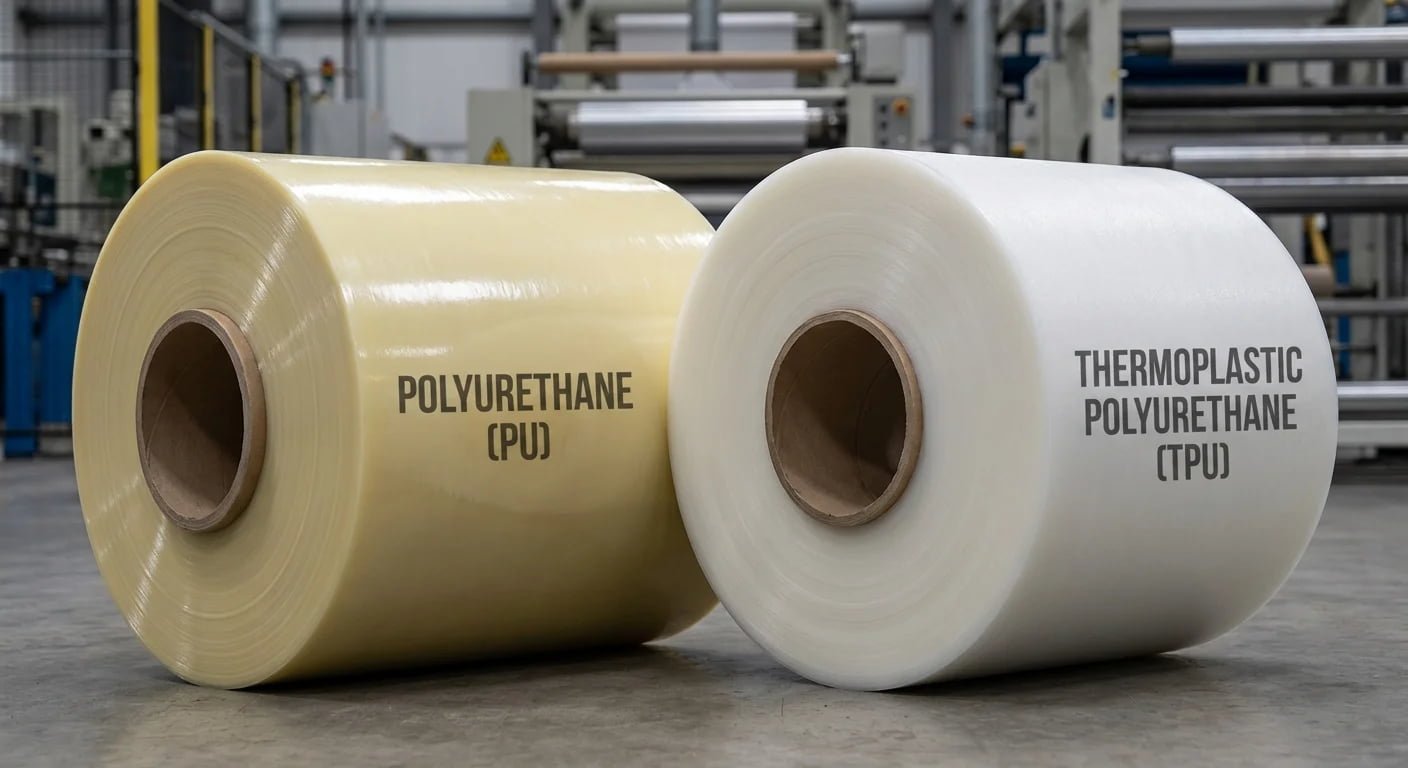
Many buyers look at a spec sheet and think the choice is simple. But in my 17 years in this industry, I've seen that the real decision is about risk, not just price. Let's break down when one material clearly outperforms the other, starting with a common misconception.
Is TPU Always the Better Choice Over PU?
Think TPU is the automatic upgrade? This assumption can lead to overspending. Let's clarify when this powerful material is truly necessary for your product's success.
No, TPU is not always better. While superior in durability and flexibility, it can be overkill for applications where PU's cost-effectiveness and suitability for traditional coating or foaming processes are sufficient. The "better" choice is always application-specific.
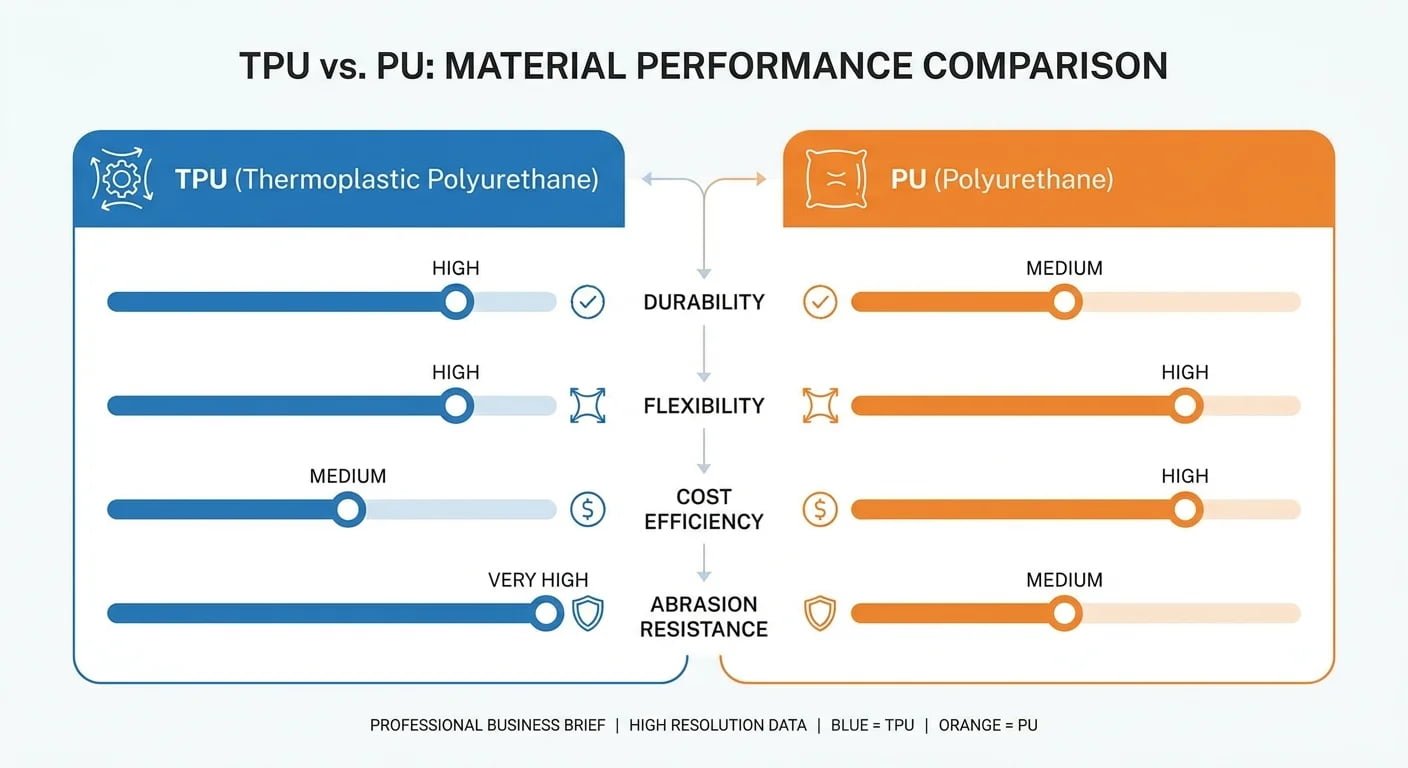
In customer selection discussions, we often see a focus on TPU's impressive specs. This can lead to a "one-size-fits-all" mentality, where a more expensive material is chosen for a job that doesn't require it. The key is to match the material to the product's real-world environment and expected lifespan.
Understanding the Performance-Cost Trade-off
TPU offers superior abrasion resistance, tensile strength, and low-temperature flexibility2. This is crucial for products like outdoor gear, medical devices, or automotive interiors3 that face harsh conditions. For example, a sun shelter needs to withstand wind, rain, and UV exposure without cracking4. Here, TPU is a clear winner. But these properties come at a higher material cost. If you are making a promotional tote bag that will be used a few times, that level of durability is unnecessary.
Processing Compatibility Matters
Your manufacturing process is another critical factor. Many factories are optimized for traditional PU processes like liquid coating or foaming5. Switching to TPU film lamination might require new equipment, process adjustments, and employee training6. This adds to the total cost and complexity. The right choice considers not just the material itself, but how it integrates into your existing production lines.
| Factor | Favoring PU | Favoring TPU |
|---|---|---|
| Durability Need | Low to Moderate | High to Extreme |
| Flexibility Need | Standard | High, especially at low temps |
| Processing Method | Liquid Coating, Foaming | Film Lamination, Extrusion |
| Budget Priority | Initial Cost | Total Lifecycle Cost |
| Product Lifespan | Short to Medium | Medium to Long |
When Does PU Make More Sense Than TPU?
Worried about high material costs? Choosing an expensive material when you don't need to hurts your bottom line. Let's identify where PU is the smart, practical choice.
PU is the better choice for budget-sensitive projects with shorter lifecycles and less demanding conditions7. It excels in applications like fast fashion accessories, disposable medical items, or basic synthetic leather8 where its lower cost is a key advantage.
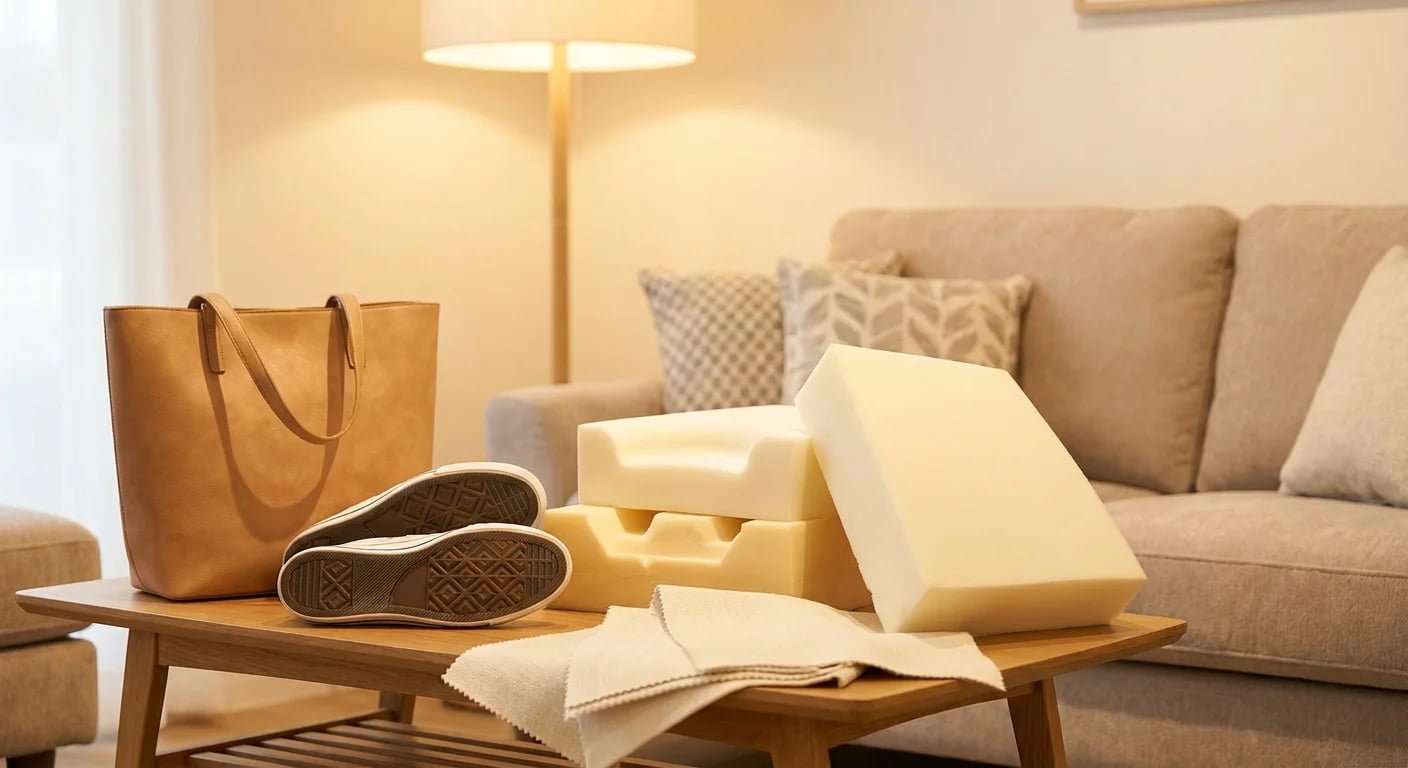
From my experience working with buyers across many industries, PU remains a very strategic and effective choice in several key areas. It's not an "inferior" material; it's a different material optimized for a different set of business and product requirements. Thinking of it this way helps clarify its value.
Cost-Driven and High-Volume Applications
For items like fast-fashion handbags, basic shoe linings, or some furniture upholstery, the product doesn't need to last for decades. PU provides the necessary look and feel at a price point that makes the final product accessible9. The cost savings on raw materials are significant when producing at a large scale. The goal here is to meet the customer's expectation for that specific product category, and PU often does this perfectly.
Legacy Processes and Equipment
Many factories have decades of experience and investment in PU coating and foaming lines10. For these businesses, continuing with PU is not just cheaper, but also more efficient. They avoid the capital expenditure and retraining needed to switch to TPU film lamination. Their teams are experts in handling liquid PU, controlling its application, and achieving consistent results. In this context, forcing a switch to TPU would disrupt a stable and profitable operation.
| Application Category | Why PU is a Good Fit | Example Products |
|---|---|---|
| Fast Fashion | Short product lifecycle, cost is paramount. | Handbags, belts, shoe uppers. |
| Disposable Goods | Single-use or short-term use. | Some medical pads, temporary covers. |
| Basic Upholstery | Indoor use, low-abrasion environments. | Budget furniture, decorative panels. |
| Foam Products | Excellent for creating soft or rigid foams. | Cushions, insulation, padding. |
What are the Hidden Costs of Choosing the Wrong Material?
Focused only on the per-meter price? This mistake can lead to product returns and brand damage. The real cost of a material includes its entire lifecycle performance.
The hidden costs are significant. Choosing a cheaper material for a demanding application can cause cracking, delamination, and yellowing11. This leads to product failures, warranty claims, reputational damage, and lost customers—all far more expensive than the initial material savings.
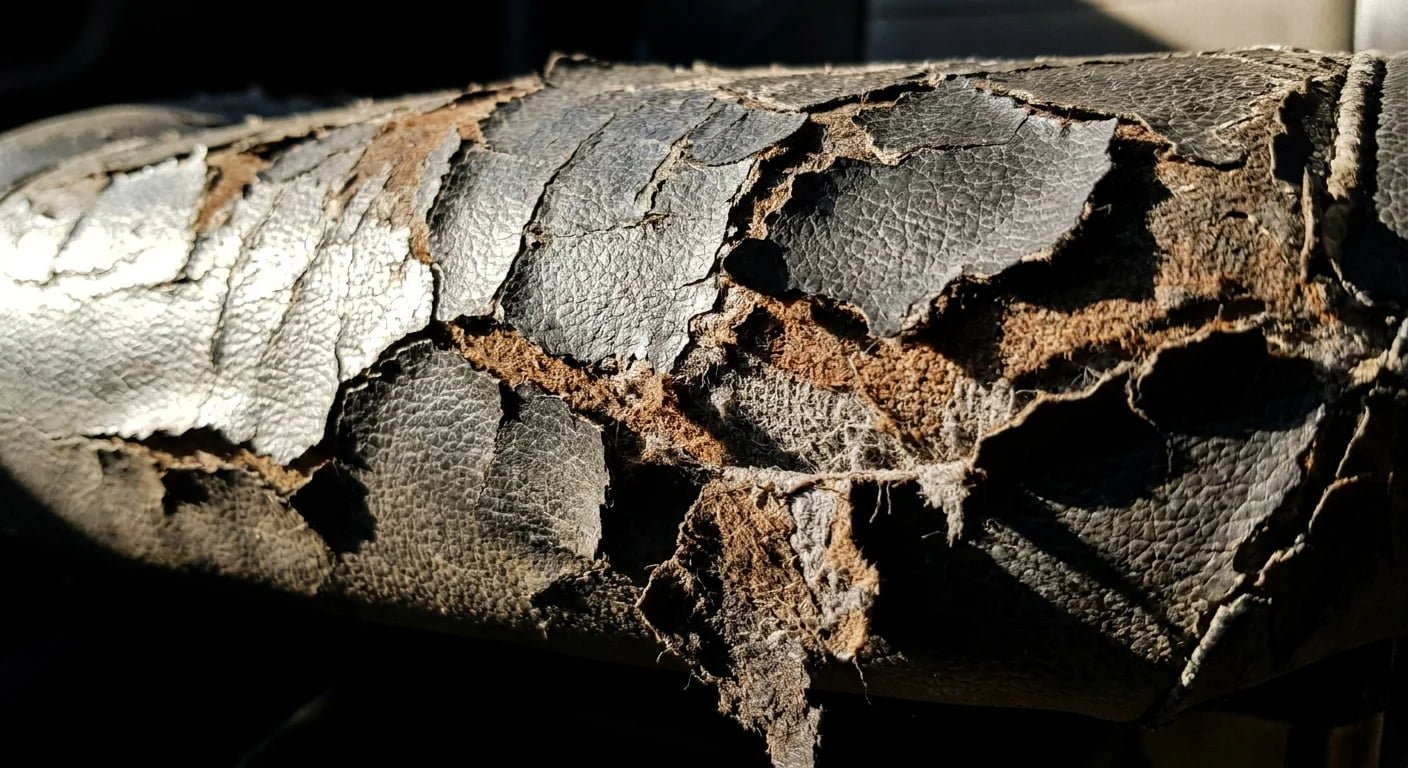
For lamination and application-based projects, buyers commonly overlook the concept of "total failure cost." This cost isn't on the initial invoice. It appears months or years later in the form of customer complaints and lost business. The initial saving on a cheaper material gets erased many times over.
Post-Production Failures
This is the biggest risk. I once consulted for a company making waterproof mattress protectors. They switched to a cheaper material to lower costs. Within a year, they faced a wave of returns because the material was cracking after washing. The TPU film we supply, with its high durability and hydrolysis resistance12, would have prevented this. The damage to their brand reputation was far more costly than the few cents they saved per meter.
Processing and Yield Issues
In our factory, we focus on consistent film thickness and quality. A cheaper, less stable material can cause major problems during lamination, leading to wrinkles or poor adhesion. This results in a lower yield of usable final product. You might buy 1000 meters of cheap material but only get 800 meters of sellable goods due to defects. With a stable, high-quality TPU film, your yield is much higher, making the effective cost more competitive than it first appears.
| Cost Factor | Initial View (Price-Focused) | Total Cost View (Risk-Focused) |
|---|---|---|
| Material Price | PU is cheaper. This is the main focus. | TPU is more expensive, but is an investment. |
| Processing Yield | Not considered. | TPU's stability can lead to higher yield. |
| Product Returns | Not considered. | TPU's durability reduces returns and warranty costs. |
| Brand Reputation | Not considered. | High performance protects brand value. |
| Compliance Risk | Assumed to be equal. | Specific TPU grades meet tough standards (OEKO-TEX, GRS). |
Conclusion
Choosing between PU and TPU isn't about which is better, but which is right for your product. Focus on application demands, total cost, and risk to ensure success.
"and recycled thermoplastic polyurethane composites - BioResources", https://bioresources.cnr.ncsu.edu/resources/effect-of-the-filler-content-on-some-physical-and-mechanical-properties-of-virgin-and-recycled-thermoplastic-polyurethane-composites/. A polymer handbook or materials-science source can support that thermoplastic polyurethane is generally selected for higher mechanical performance and process consistency, while conventional polyurethane systems are widely used in cost-sensitive coatings and foams; this supports the selection framework rather than proving every application-specific outcome. Evidence role: general_support; source type: education. Supports: PU is more appropriate for cost-sensitive, shorter-life products with simpler processing, while TPU is preferred for durability, flexibility, demanding performance, processing stability, and compliance-sensitive uses.. Scope note: Contextual support only; actual suitability depends on grade, additives, processing method, and end-use testing. ↩
"[PDF] Stress-Strain Behavior of Thermoplastic Polyurethane - MIT", https://web.mit.edu/cortiz/www/Jerry/TPU_final.pdf. Materials-science references commonly describe TPU elastomers as having high abrasion resistance, tensile strength, and useful flexibility over a wide temperature range; this supports the stated property profile but does not establish superiority over every PU formulation. Evidence role: expert_consensus; source type: paper. Supports: TPU generally offers strong abrasion resistance, tensile strength, and low-temperature flexibility.. Scope note: The comparison is grade-dependent because PU and TPU families include many formulations with different hard-segment content, additives, and processing histories. ↩
"Preparation of ordered mesoporous and macroporous thermoplastic ...", https://www.academia.edu/108595863/Preparation_of_ordered_mesoporous_and_macroporous_thermoplastic_polyurethane_surfaces_for_potential_medical_applications?force_claim_to_highlight=true. Application-focused polymer references identify TPU use in sectors such as medical devices, automotive components, and protective or outdoor products because of its mechanical durability and elastomeric properties; this supports the examples as recognized uses, not as evidence that TPU is always optimal in those sectors. Evidence role: case_reference; source type: institution. Supports: TPU is used in demanding applications such as outdoor gear, medical devices, and automotive interiors.. Scope note: The source would verify common application areas, while final material selection still requires product-specific qualification and regulatory review. ↩
"Impact of UV-C on material degradation: a scoping literature review", https://pmc.ncbi.nlm.nih.gov/articles/PMC12415791/. Polymer degradation literature shows that ultraviolet radiation can induce chemical changes in polyurethane materials that contribute to embrittlement, cracking, or loss of mechanical properties; this supports the environmental-risk mechanism rather than the performance of a specific sun-shelter material. Evidence role: mechanism; source type: paper. Supports: Products exposed outdoors may need materials that resist UV-related cracking and degradation.. Scope note: UV resistance varies substantially with polymer chemistry, stabilizers, pigments, coating structure, and exposure conditions. ↩
"[PDF] Introduction - VTechWorks", https://vtechworks.lib.vt.edu/bitstream/handle/10919/29887/02_Chapter_1.pdf?sequence=6. Technical references on polyurethane manufacturing describe liquid reactive systems used in coatings and the production of flexible and rigid polyurethane foams; this supports the statement that coating and foaming are established PU processing routes. Evidence role: definition; source type: education. Supports: Liquid coating and foaming are traditional processing routes for polyurethane materials.. Scope note: The source would describe common PU processing methods, not compare their economics with TPU lamination in a specific factory. ↩
"Process Validation for Medical Injection Molding - Penn State Behrend", https://behrend.psu.edu/community-and-workforce-programs/plastics-training-academy/courses/process-validation. Manufacturing and polymer-processing sources explain that changing polymer format or process route, such as moving from reactive coating to thermoplastic film lamination, can require equipment compatibility checks, process parameter development, and operator training; this supports the operational-change claim at a general level. Evidence role: general_support; source type: education. Supports: Changing from PU coating or foaming to TPU film lamination may require new equipment, process adjustments, and training.. Scope note: The extent of required investment depends on the existing machinery, adhesive system, film grade, production speed, and quality requirements. ↩
"[PDF] Greener Alternatives to Dimethylformamide Use in Polyurethane ...", https://bcgc.berkeley.edu/sites/default/files/nike-dmf_finalreport-2019.pdf. Polymer application references describe polyurethane coatings, synthetic leather, and foams as widely used where functional performance and low production cost are important; this supports the cost-sensitive-use rationale but does not prove PU is the lowest-cost option in every market. Evidence role: general_support; source type: institution. Supports: PU can be appropriate for budget-sensitive products with shorter expected service life and less demanding use conditions.. Scope note: Material economics vary by region, grade, supplier contracts, oil-derived feedstock prices, and processing yield. ↩
"List of polyurethane applications", https://en.wikipedia.org/wiki/List_of_polyurethane_applications. General materials references document polyurethane use in synthetic leather, coatings, foams, and some medical products; this supports the listed categories as plausible PU applications, while not validating every disposable or fashion product formulation. Evidence role: case_reference; source type: encyclopedia. Supports: PU is used in applications such as fashion accessories, some medical items, and synthetic leather.. Scope note: Medical applications require biocompatibility and regulatory qualification for the specific formulation and device use. ↩
"PU Fabric Leather 2 Yards 58" x 72", 0.6mm Thick Faux Synthetic ...", https://www.amazon.com/Leather-Synthetic-Material-Upholstery-Decorations/dp/B0B15MGFC1. Sources on synthetic leather and polyurethane-coated textiles describe PU as a common substitute for leather that can provide leather-like appearance and tactile properties at lower cost than natural leather; this supports the look-and-feel and affordability point in a general market context. Evidence role: general_support; source type: research. Supports: PU can provide leather-like appearance and feel for accessible consumer products.. Scope note: The source would compare PU synthetic leather mainly with natural leather, not necessarily with all TPU alternatives or all quality grades. ↩
"Polyurethane Foams: Past, Present, and Future - PMC", https://pmc.ncbi.nlm.nih.gov/articles/PMC6213201/. Historical accounts of the polyurethane industry show that polyurethane foams and coatings have been commercially produced for many decades, providing context for long-standing industrial expertise and capital investment in these process lines. Evidence role: historical_context; source type: encyclopedia. Supports: PU coating and foaming processes are mature industrial technologies with decades of commercial use.. Scope note: Historical industry evidence supports the plausibility of established infrastructure but does not quantify how many factories currently operate such lines. ↩
"Multi-Regional Natural Aging Behaviors and Degradation ... - PMC", https://pmc.ncbi.nlm.nih.gov/articles/PMC12527080/. Polymer aging studies describe hydrolysis, oxidation, ultraviolet exposure, and interfacial adhesion loss as mechanisms that can lead to cracking, yellowing, or delamination in polyurethane-based materials; this supports the failure modes as known risks, not as proof that they will occur in every lower-cost material. Evidence role: mechanism; source type: paper. Supports: In demanding applications, unsuitable or poorly stabilized polymer materials can fail through cracking, delamination, and yellowing.. Scope note: Actual failure depends on formulation, substrate, adhesive, stabilizers, service environment, and cleaning or washing conditions. ↩
"Tuning Thermal, Morphological, and Physicochemical Properties of ...", https://pmc.ncbi.nlm.nih.gov/articles/PMC9371192/. Peer-reviewed studies on thermoplastic polyurethane report that hydrolysis resistance and durability vary by TPU chemistry, with polyether-based TPU generally showing better hydrolytic stability than polyester-based TPU; this supports the property concept but not the performance of the supplier’s specific film. Evidence role: mechanism; source type: paper. Supports: Certain TPU films can be designed for high durability and hydrolysis resistance.. Scope note: The source would not verify the supplier’s product; grade-specific test data would be needed for that direct claim. ↩